
Feature
Feature 1 - Can be set up anywhere

This is a "movable high-function house" towed by a large truck. Since they are not regulated by the Building Standard Law, they can be installed in regulated areas, forested areas, and some agricultural land, which is impossible for ordinary buildings. You can move and live where you want to live. We can also support ground crusting and upland relocation plans.
*May not be able to be transported depending on the width of the road or site area.
Feature 2 - Ready to live in!

No foundation work is required, so there is no hassle and no cost. Since they are manufactured at the construction company's own factory and sent directly to the customer in a completed and quality-inspected condition, they can be produced in a short period of time, approximately one and a half months after the official order is received. You can start your comfortable new life immediately.
*Transportation may require some time to apply for standard relaxation and special vehicle permits.
Feature 3 - Comfortable to live in, comparable to an ordinary house

This is not a container house, super house, or camper. Highly insulated 2×4 construction method that shields the house from heat and cold, and facilities such as interior, cloths, and plumbing are equivalent to those of condominiums. Maintenance is assured with specifications from a major Japanese manufacturer. Lofts are also available for storage or use as spare rooms. This is a permanent residence where the family can live comfortably for a long time.
Bright and open space.
There is enough space for a family of four to live comfortably.
Fully equipped with all the facilities necessary for daily life. You can live safely and securely.
Feature 4 - Superior Cost Performance

With a track record of 21,000 homes, we have been able to realize a new standard of value with excellent cost performance. The price is only about the same as one new car. No property tax, automobile acquisition tax, weight tax, etc. are required. Loans, leases, fire and earthquake insurance are also available.
Other than the main unit, all other necessary costs are transportation, installation (including jack), and lifeline construction (electricity, gas, water, and sewage). Other external works such as landscaping, grading, and wooden decks are additional costs.
Feature 5 - Can be resold when no longer needed

This is a residence that frees you from hesitation and uncertainty about the future. The advantage of being mobile makes it flexible to accommodate changes in lifestyle.
Flow
We listen to your requests, design, and build the product at our factory.
The product is transported to the site by a trailer.
The requirements of customers considering a mobile home vary widely. We carefully listen to what kind of lifestyle you want to realize and propose a mobile house that is perfect for you. The completed mobile homes, which are manufactured at our own factory under thorough quality control, are towed to the destination by a large trailer. We carefully survey and plan the route to the destination and the width of the road to ensure safe delivery to the customer.
Step 1

After placing an order, we will first confirm whether or not a trailer house of your desired size can be brought in.
Step 2

We will ask you about your needs such as usage, size, budget, etc. We check if the trailer house can be carried in to the desired installation location.
Step 3

We will repeatedly propose drawings and estimates, and discuss with you to make it feasible.
Step 4

Various applications are submitted and arrangements are made for chassis fabrication.
Step 5

Finally, the main body construction. The same carpenters as those used for ordinary houses will fabricate the mobile house in compliance with the Building Standard Law.
Step 6
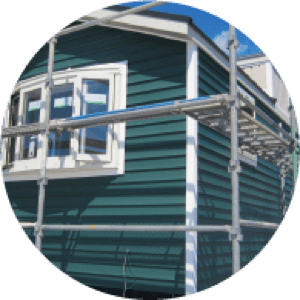
Interior work is also completed, and the client's dream takes shape.
Step 7

After completing the pre-transportation and pre-departure checks, the trailer house is ready to go on the road with the various transportation permit documents.
Step 8

After setting up the house according to the layout plan and adjusting the levels, the lifelines are connected. The start of a comfortable mobile house life!
Video of transport
FAQ
Q. Is free-order available?
We manufacture almost exclusively on a free-order basis.
We can meet your requirements for site size, floor plan, specifications, and budget.
By manufacturing mobile homes to our own specifications, we can develop a unique brand that differentiates us from our competitors.
However, we cannot accommodate larger than specified sizes or structures that are impossible to manufacture.
Q. What are the costs other than the main unit?
The cost of transportation (including application for deregulation of standards + application fee for special vehicle permits), installation, jacking, and lifeline construction (water, gas, and electricity).
Lifeline installation requires electrical, water, and gas (propane) work. Costs vary depending on the installation location and contractor, so please consult with us in advance.
For details on transportation costs, please see the transportation fee.
https://dream-pj.co.jp/consideration/data/charge.pdf
Q. Are toilets available?
The standard toilet in the mobile house is a flush shower toilet, the same as in a regular house.
The plumbing from the mobile home is connected to a sewerage system or septic tank.
Q. Where will the sewage be discharged? What about water, electricity, and gas?
Facilities and connections inside the mobile home are the same as those in a regular house, and are connected and used in the following manner.
However, when installing them, they should be connected in a removable manner without using special tools.
*The Japan RV and Mobile House Association (formerly the Japan RV Importers Association) has a [Mobile House Handling Manual].
http://www.jrvia.jp/action/joining.html
Q. Can I change the size, color, or other specifications?
We are a general detached house building company, so we can meet our customers' requests in most cases.
Although it depends on the road conditions to the installation site, our basic design is a maximum width of 3.5m x length of 11.0m x height of 4.1m.
Also, the interior floor plan can be freely changed.
Q. How long does it take from order to completion?
The main unit will be completed in approximately 2 months after receiving a formal order.
However, it may take some time (about 3 months) to apply for a standard relaxation for transportation and a special vehicle permit.
Q. What about fire resistance?
It is equivalent to that of an ordinary detached house.
Since the main body is a 2x4 structure, it has superior fire resistance compared to general construction methods. Fire and stain resistant exterior siding and gypsum board are also used on the interior walls.
Fire insurance premiums are also lower for frame construction (2×4 construction) because of its flame-retardant structure.
Q. Are there any problems with earthquakes?
Mobile homes are subjected to the same shocks and vibrations as earthquakes when they are moved, so they are built strong and flexible with load-bearing walls to withstand them.
Since they are light in weight, there is very little risk of collapse. Even in the event of a major earthquake, the jacks in contact with the ground serve as a vibration-damping structure and absorb vibrations.
Q. Are there any problems with typhoons?
Strong winds are the main concern for damage. In fact, in the Okinawa region, concrete blocks and mobile homes are connected by metal. There are countermeasures against shaking, so please do not hesitate to contact us.
*Typhoon No. 21, which hit the Osaka region in 2018, made big news when a tanker hit the Kansai International Airport connecting bridge with an instantaneous maximum wind speed of 58.1 meters. Twenty-one of our mobile homes were set up as a glamping hotel in [Maishima], Osaka City, which is located in the same Osaka Bay. Some of the mobile homes in the coastal area skidded more than 50 cm, but did not topple over. After that, for safety reasons, we built a concrete dirt floor and connected them with metal.
Q. Do you have insurance?
We are affiliated with an insurance company, and like the house, we are covered for fire, explosion, lightning, wind and snow damage, as well as earthquake damage, fire, tsunami, etc., to protect the building and household goods.
Q. Do you offer loans or leases?
No, we do not.
Caution - Criteria for being treated as a building.
Even if a mobile home is not considered a building at the time of installation, it will be treated as a building from the time of installation if any of the following conditions are met as a result of subsequent maintenance and management.
https://dream-pj.co.jp/consideration/data/hyo3.pdf
1. those with stairs, porches, balconies, fences, etc. that impede the movement of the mobile home. The following also fall under the category of "obstructions to mobility."
2. those with wheels removed, or those with wheels attached but not maintained in a condition sufficient to allow the mobile home to travel
3. those whose superstructure is supported on the ground by something other than wheels and whose supporting structure cannot be easily removed (e.g., if it is necessary to destroy a part of the supporting structure in order to remove it)
4. for which there is no pathway for moving the mobile home (a pathway that has a structure (slope, width, roadbed, etc.) capable of moving a trailer without hindrance and is continuous from the location of the mobile home to a public street) within the mobile home site
5. The mobile house does not have a detachable system (removable without tools) for connecting facilities such as water supply, drainage, gas, electricity, telephone, air-conditioning, etc. to the mobile house.
6. Other mobile homes that are not deemed to be able to be moved at any time and at will due to their size (floor space, height, number of floors, etc.), configuration, or installation conditions.